

In celebration of Black Music Month, I Love Us had the opportunity to sit down with Pierce Freelon, the GRAMMY-nominated musician, author, podcaster, and father of two, whose body of work has redefined what it means to make music for children. Through imaginative albums like Black to the Future (2021) and AnceStars (2023), Freelon invites young listeners into a sonic universe filled with ancestral wisdom, futuristic dreams, and honest emotional expression. His work resists simplicity and leans into spirit, affirming that Black children deserve music as layered, intentional, and sacred as they are.
“This is a wonderful question,” he says when asked how he balances sacred messaging with a child-friendly approach. “I believe making music for children is holding sacred space. As a baby, when my grandmother held me in her arms, and hummed melodies into my ear, she was both holding sacred space for me and making music at the same time. In the African American tradition, music is sacred. It connects us to our ancestors, and helps us imagine a future of possibilities and potential. Tapping into the rhythm of my ancestors through my music feels as natural to me as giving my daughter a piggyback ride.”
It’s no surprise that his artistry is steeped in generational love. Freelon is the son of the late architect Phil Freelon—one of the lead designers of the Smithsonian National Museum of African American History and Culture—and jazz singer Nnenna Freelon. His family’s legacy, built on cultural preservation and Black excellence, shows up in his work not just as inspiration but as spiritual infrastructure.
“There is an altar for my father in my music studio,” he shares. “It sits right behind me, where I write and record all of my songs. Through this altar, I invite the energy of my beloved ancestors into my creative process. Much of my music is filtered through the lens of fatherhood, so it feels very safe and sacred to write songs, with my Dad behind me. He was such a loving, kind, funny and creative man—and I feel like these values are imbued in my music, with his oversight.”
The songs themselves are warm and funky, filled with affirmations and electricity. The lyrics are easy for children to memorize but layered with meaning, often introducing young listeners to ancestral reverence, emotional intelligence, and joy as resistance. It’s music that encourages not just movement but mindfulness.
In addition to his albums, Freelon’s creative output includes two children’s picture books published by Little, Brown Books for Young Readers: Daddy-Daughter Day (2022) and Daddy and Me: Side by Side (2023), which celebrate Black fatherhood and the everyday sacredness of family bonding. He’s also the co-creator and voice behind the PBS Kids podcast Jamming on the Job, where he plays Beat-master BoomBox!, a playful character helping children learn about music and careers. His songwriting credits for animated shows like Alma’s Way and Work It Out Wombats! further extend his impact into the homes of millions.
While the beats are catchy, the spirit behind them runs deep.
“My hope for families and kids listening to my music is that they feel, period,” Freelon says. “I think feeling is a spiritual practice in and of itself. If they feel a hint of joy, great! If they feel a twinge of sadness, that’s beautiful! If they feel a bit of encouragement, or inspiration, or grief, or solace—wonderful. I have done my job.”
As Black children navigate systemic pressures from a young age, creating safe space for honest emotion is nothing short of radical. Freelon’s work gives permission to feel everything—silliness, sorrow, wonder, confusion—and affirms that it all belongs.
That spiritual orientation extends to how he engages with young people’s vernacular. When asked how he sees spirituality showing up in youth culture today, Freelon beams.
“I love how young people these days use the word ‘aura’ to describe a person’s energy or vibe,” he says. “This is a very spiritual observation, which reminds me of the Chinese concept of every person having Qi, or life force, or how Brazilians describe their unique energy as ‘ginga’. It’s a way to describe a person—not by commenting on their physical bodies but by observing their spiritual energy. I don’t think kids realize how deep they’re being!”
Then, he recounts a recent moment with his daughter. “The other day, my daughter told me I had ‘green aura with flies’. She meant it as an insult—saying I was an icky color that attracts bugs. But I choose to take it as a compliment. I thanked her and reminded her of all the wonderful green things in this world: trees, frogs, snakes, watermelons, auroras… and I told her that I was not green with flies, but that I was green AND fly. She rolled her eyes.”
That interplay between generational humor and spiritual depth is symbolic of Freelon’s creative lens. He doesn’t talk down to children; he rises to meet them where they are and builds a bridge to something bigger.
Before his full-time commitment to family-centered creative work, he served on Durham’s City Council and taught at both the University of North Carolina at Chapel Hill and North Carolina Central University in departments spanning Political Science, Music, and African, African American, and Diaspora Studies. He co-founded Beat Making Lab, an Emmy-winning PBS web series, and founded Blackspace—a digital makerspace offering free Afrofuturism-rooted programming to Black youth in Durham, North Carolina. That range—art, politics, community, technology—finds harmony in his work, each note echoing a holistic vision for what it means to nurture a liberated future.
Even the visual worlds he creates for his projects evoke that sense of cosmic purpose. The cover of AnceStars (pictured above), for instance, is less cartoonish than one might expect for a kids’ album and more reminiscent of a Sun Ra or Parliament-Funkadelic record. It’s a signal to young listeners that their dreams and imaginations deserve aesthetics as rich and layered as any adult’s.
In the classroom, in the studio, and on the stage, Freelon is clear: music for children can—and should—carry weight.
There is no condescension in his tone, no simplification of what children can handle emotionally or spiritually. Instead, he models trust. Trust in their capacity to feel. Trust in their ability to remember. Trust that even in early childhood, they are whole humans with histories and futures worth singing about.
As a father, his love for his children is not just an inspiration but a guidepost.
“Much of my music is filtered through the lens of fatherhood,” he explains. “So it feels very safe and sacred to write songs, with my Dad behind me.”
It’s a powerful lineage—his father’s legacy behind him, his children’s future ahead of him, and a present-day mission to score the sacred moments in between.
As we reflect on the spirit of Black Music Month, Pierce Freelon reminds us that sacred music starts young—and it sounds like love.
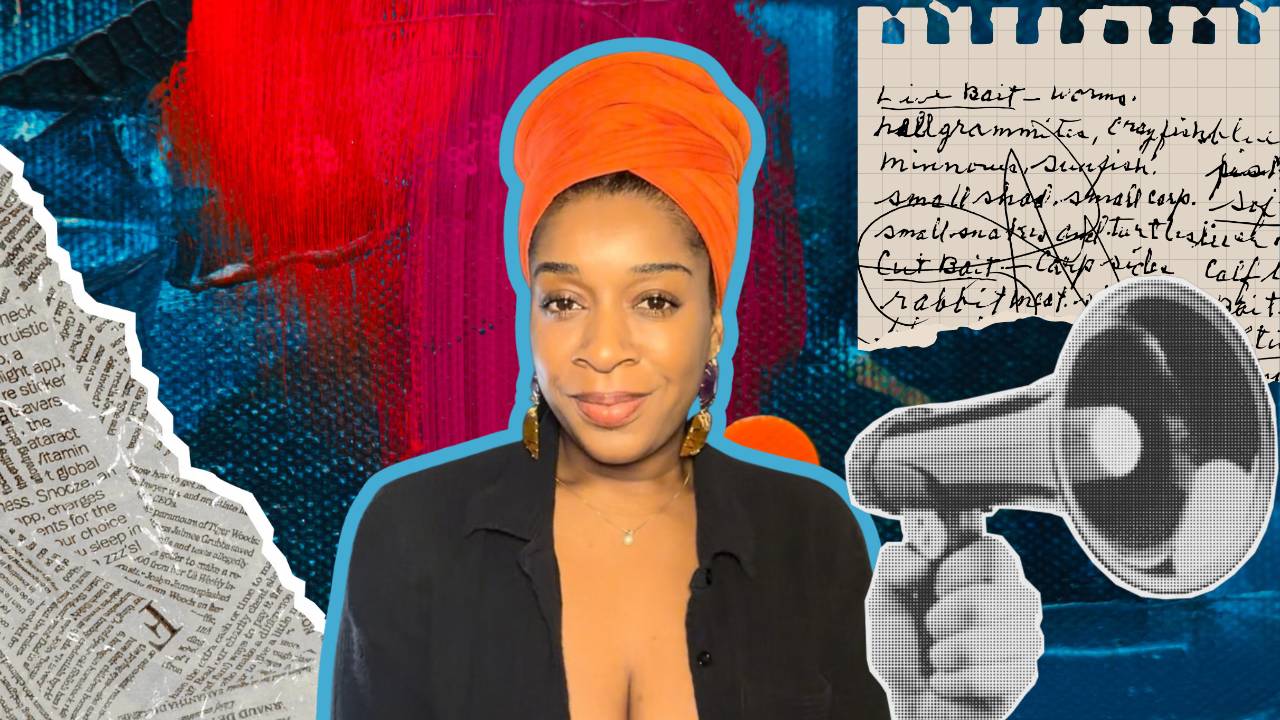
Cover photo: The Kids Are Alright—Because Pierce Freelon Is Making Sure They Feel Everything / Credit: Derrick Beasley


Leave a Reply