
My mother says she didn’t name me.
When she tells the story, she always starts with a laugh. “It wasn’t up to me,” she says. “Your great-aunts and Nana already had it figured out.” They had declared my name before I even arrived: Sathiyyah.
It wasn’t my great-grand aunt’s birth name — it was the one she chose for herself. When she passed, that name didn’t die with her. It stayed in the air until I was born to carry it forward. That’s how names work in my family — and, really, in many Black families. They travel. They transform. They tell stories.
For as long as we’ve been here, Black naming has been a language of creativity and resistance. It’s been a way to honor our history and our hope. However, every few years, someone brings the same tired question back to the table: Why can’t y’all just give your kids normal names?
The “Resume-Ready” Myth
When people say “normal,” they mean “white-sounding.”
In 2004, economists Marianne Bertrand and Sendhil Mullainathan sent out identical résumés to employers in Boston and Chicago. The only difference was the name at the top. Applications labeled with names like Emily Walsh or Greg Baker received 50 percent more callbacks than those with names like Lakisha Washington or Jamal Jones.
Economists Roland G. Fryer Jr. and Steven D. Levitt later studied the rise of distinctively Black names and found that once you account for background and education, the name itself has no negative impact on a child’s life outcomes.
The takeaway? The bias–not the name–name is the barrier.
Before the Boat
Long before our ancestors were forced to answer to someone else’s language, they had their own.
Among the Yoruba, naming was ceremony. The Ìsomọlórúkọ — literally, “to give the child a name” — took place seven or eight days after birth. Every name carried a story: Taiwo, “the first to taste the world,” and Kehinde, “the one who comes after.” A name could describe a child’s place in the family, the circumstances of birth, or the hopes pinned to their future.
For the Igbo, names followed similar patterns. Words like Chi or Chukwu (meaning “God” or “spirit”) appeared in countless variations — Chinonso (“God is near”), Chiamaka (“God is beautiful”), Chukwuebuka (“God is great”). Naming was language, lineage, and identity wrapped together.
That legacy of meaning-making didn’t end when people were taken from their homes. It just evolved.
Renaming as Resistance
During slavery, Africans were stripped of their names and given new ones meant to erase their identity — Scipio, Venus, Caesar. Even within the brutality of that system, people used naming to hold onto connection.
Historian Herbert Gutman documented how enslaved families reused the same first names across generations to track bloodlines through separation. After emancipation, newly freed people stood in long lines to register surnames of their choosing — Freeman, Washington, or something entirely new. For many, naming was the first act of ownership they were ever allowed.
Filmmaker Julie Dash captured that spirit in her 1991 classic Daughters of the Dust. Two of her characters are named Myown (“my own”) and Iona (“I own her”). Their names say everything about that moment in history — a generation determined to claim themselves and their children, fully and publicly, for the first time.
Faith, Movements, and Meaning
Faith traditions reshaped Black naming throughout the 20th century.
Christianity brought with it Isaiah, Hezekiah, Moses, and other biblical staples. Islam introduced Amir, Fatima, and Jamal, spreading far beyond the Muslim community as names of cultural pride.
The Nation of Islam made renaming an act of liberation. Cassius Clay became Muhammad Ali. Malcolm Little became El-Hajj Malik Shabazz. Each transformation declared independence from the names assigned under slavery.
Later, the Five Percent Nation (Nation of Gods and Earths) turned language into code, popularizing the Sha- prefixes and -asia endings that became common in 1970s and ’80s baby names. What looked like creative spelling was actually cultural expression — innovation born from knowledge of identity.
The 1970s Naming Renaissance
The 1970s marked a turning point.
Afrocentric pride was blooming, the Black Power movement was reshaping identity, and naming became one more space where we took ownership. Parents reached for African, Arabic, and Swahili names — and then remixed them.
Linguists later found that the new naming patterns weren’t random. The La-, De-, and Ja- prefixes and -isha and -ique endings mirrored the rhythm and syntax of West African and Creole languages. Distinctive names like LaKeisha, DeShawn, and TaNique were part of a recognizable system — creative, but not chaotic.
Every new name was a statement: We define ourselves.
Love, Luxury, and Legacy
Of course, not every name is born from protest. Some are born from joy, romance, or pure imagination.
A couple named Sheila and Lawrence might merge into Shelarria. A mother who wants her child treated with dignity might choose Sir, Royalty, or Mademoiselle. Others pick names that represent beauty and aspiration — Dior, Porsche, Milan, Paris, India, Egypt.
Then there are the names that call back to those who came before — Gloria for a grandmother, Dessalines, Malcolm, Aaliyah, or Sathiyyah. They’re ways of keeping memory alive. Every generation of Black children carries an archive of who we’ve loved and lost, right in their introductions.
When “Creative” Means “Cultural”
Critics often dismiss new-sounding Black names as made-up, but the reality is that innovation in naming is one of the oldest American traditions we have. Yet when Black families create LaKeisha or DeAndre, it suddenly becomes a think piece.
It’s not that our naming is too creative. It just reminds the world that we still build culture in plain sight.
The Bias That Lingers
Despite the data, bias persists. Studies continue to show discrimination in hiring, housing, and education when names are perceived as “ethnic.” That pressure leads some parents to play it safe and pick something they believe will open doors.
But those doors shouldn’t require assimilation to open. Our names are mirrors reflecting where we come from. They deserve to be spoken — correctly, respectfully, and without apology.
Legacy on Paper
When I was a kid, I didn’t always appreciate my name. Teachers paused when they saw it on the attendance sheet. Kids asked what it “meant” like it needed translation. As I got older, I realized that being named after a woman who named herself wasn’t a burden.
My name carries a story of choice. My great-aunt claimed it, my family preserved it, and my mother passed it on. That’s how culture survives: one decision at a time.
Black naming has always done that work — holding onto fragments of history and turning them into art.
To name a child in our community is to take part in a centuries-long conversation — one that crosses oceans, languages, and generations. It’s about saying we’re still here, and we still get to choose.
So when someone calls a Black name “too much,” I think of all the people who came before me — people who were renamed, mislabeled, or unrecorded. Then I think of my great-aunt, deciding who she wanted to be and daring to write it down.
Too much? Maybe, but too much is what it took for us to exist at all. Our names are the evidence.
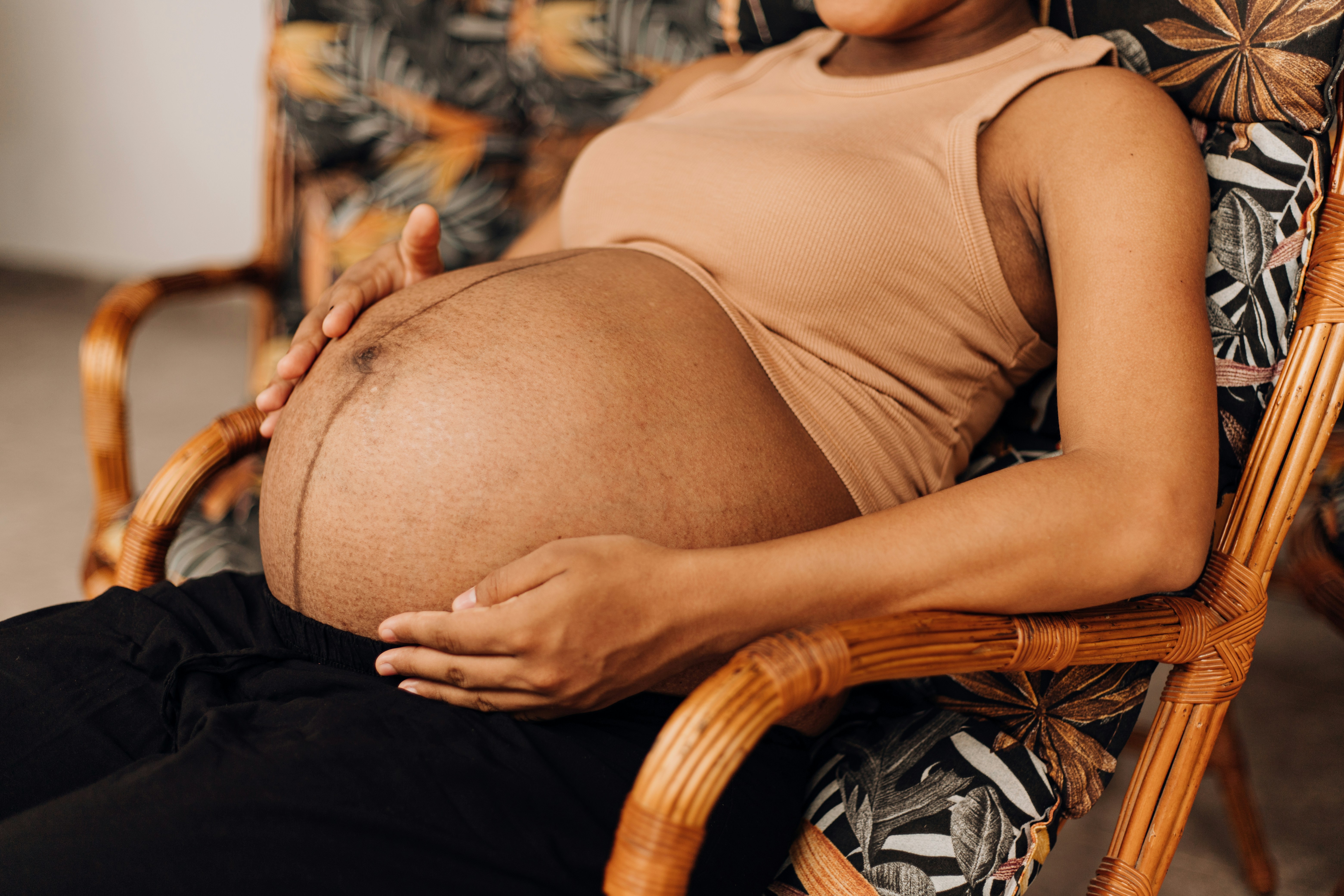
Cover photo: Jeferson Santu on Unsplash


Leave a Reply