
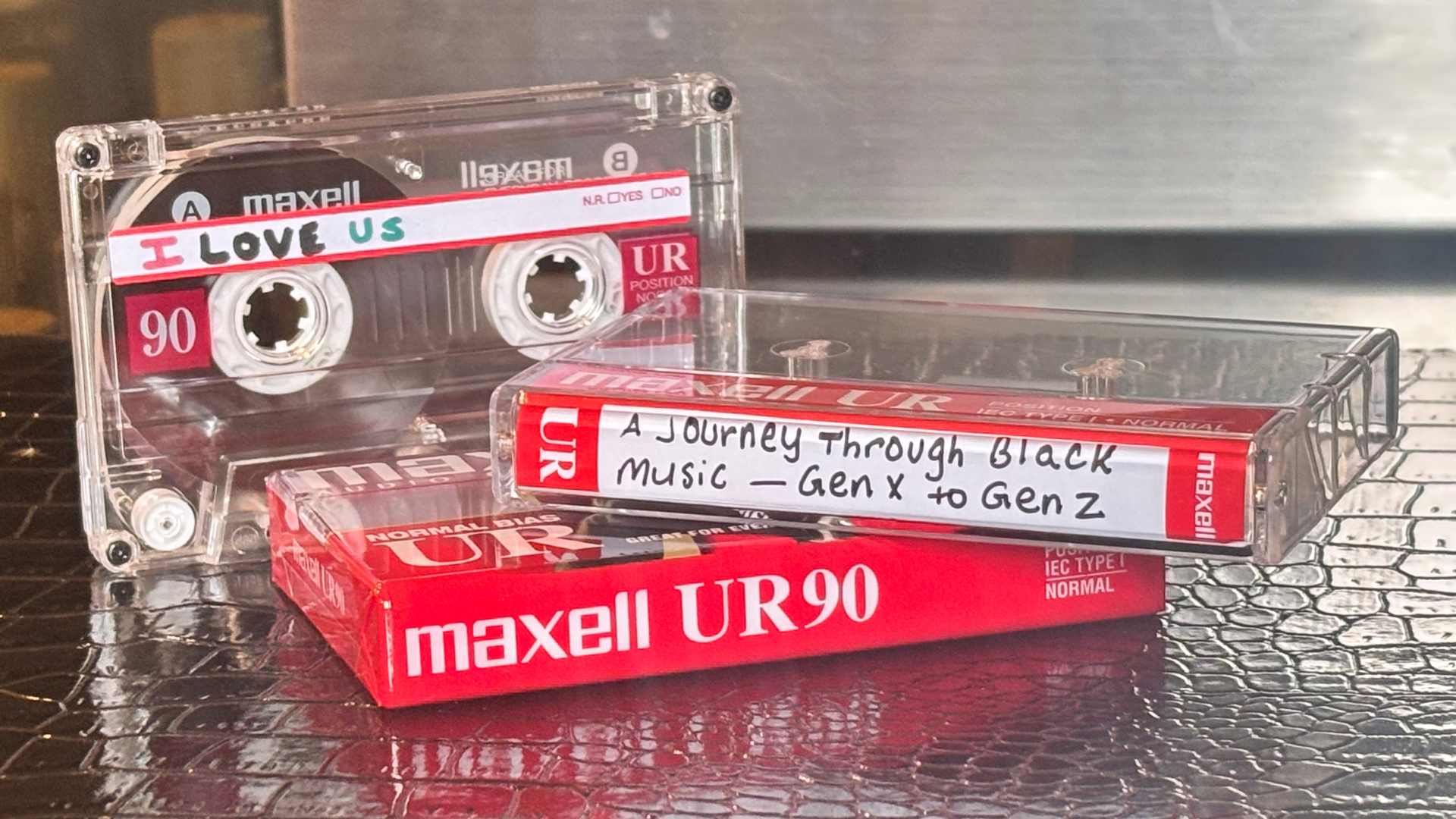
The history of Black music is rich and vibrant, capturing the emotions, struggles, and triumphs of each generation. The mixtape, a timeless expression of musical curation, serves as a unique vehicle for this storytelling. From the cassette tapes of Gen X to the digital playlists of Gen Z, the mixtape has evolved, yet its role in shaping the Black musical landscape remains constant.
Maxell, the iconic brand of cassette tapes, played an instrumental part in this cultural phenomenon. Whether you were dubbing your favorite songs from the radio, trading mixtapes with friends, or curating the perfect collection of tracks for a crush, Maxell tapes became the medium through which many shared their passion for music. Today, as Gen Z flirts with the return to analog music, there is a resurgence of interest in the simplicity and nostalgia that physical media like mixtapes bring.
To explore the significance of the mixtape across generations, the staff at I Love Us—Dewey Johnson (Gen X), Brian DeAndre and Tai Nichols (Millennials), and Alissa Davis (Gen Z)—shared their thoughts on how mixtapes have shaped their musical journeys. Each generation’s experience offers a unique perspective on how music consumption has changed and, perhaps, how the future may circle back to its analog roots.
//www.instagram.com/embed.js
Gen X: The Birth of the Mixtape and the Power of Curation

Dewey Johnson
For Dewey Johnson, co-founder of I Love Us and a member of Gen X, the mixtape was much more than a collection of songs—it was a blank canvas to express individuality and creativity. Growing up as a kid in the 80s and 90s, he recalls the personal investment that went into creating the perfect mixtape, often staying up late to capture songs from the radio:
“A cassette in my day was a blank canvas. You could do your imaginary demo, [an early form of a] podcast, or the ultimate mixtape. [Growing up in south New Jersey,] I personally would listen to the Power 9 at 9 on Power 99 FM out of Philly and listen for the perfect song. As I listened, I would wait for the last word of the DJ and the beginning of the song. Then, I’d push the record button and hope I timed it right. I was supposed to be sleeping, but I needed [Run DMC’s] ‘Peter Piper’ for my tape,” Dewey recalls.
This dedication to crafting the perfect mixtape became a rite of passage for many in Gen X. Music wasn’t just something you listened to—it was something you experienced, something you actively curated. Dewey continues:
“I also bought mixtapes from popular DJs. This allowed you to hear songs that were hot but didn’t make it to the radio. I remember it like it was yesterday, listening to something…feeling like you discovered a new artist. Cassette tapes made music yours to use how you see fit.”
Maxell tapes were the go-to for Gen Xers like Dewey, providing the medium on which music lovers could capture and share their favorite tracks. These tapes were about creating personal soundtracks, each mixtape telling a unique story.
Millennials: From Analog to Digital, the Evolution of the Mixtape
For Millennials, the mixtape continued to hold a special place, though the medium shifted from cassettes to CDs and later to digital platforms. Staff writer Brian DeAndre’, reflecting on his early experiences with mixtapes, vividly remembers how important it was to capture favorite songs from the radio:

Brian DeAndre’
“It was 1995. I was going on six years old, watching my teenage cousins anxiously wait for their new favorite song to come on the radio. They’re jamming out to the music from their boombox, taking breaks within the commercials, then it happens. Boyz II Men hum through the speaker, bringing in the background to LL Cool J’s ‘Hey Lover.’ My cousin pressed the record button so fast, she could’ve broken it.”
For Brian, the mixtape became a way to immortalize those fleeting moments when a favorite song came on. The mixtape was an essential part of Millennial culture, used to create mood-setting soundtracks for everything from road trips to cookouts. He explains:
“For the Millennial generation, the mixtape will forever be a staple in music history. Whether we were crafting the perfect cassette for the girl we had a crush on, attaching a love note stating why we handpicked every song, or burning a mass amount of CDs for the homies to hear at five dollars a pop, every Millennial has a Walkman memory.”
As technology advanced, Millennials witnessed the shift from cassettes and CDs to MP3 players and digital playlists. While physical tapes were slowly replaced by iPods and streaming services, the spirit of the mixtape lived on through carefully curated playlists and burned CDs. However, Brian notes that something was lost in the transition to digital:
“CDs were becoming a collector’s item rather than a main source of song. Downloading music from the Internet proved to be a bit risky since many music-sharing applications of the time (e.g. Limewire) carried computer viruses with the files made available. And with the pace of the world steadily increasing, who honestly had the bandwidth to sit at a desktop synchronizing MP3s and devices?”
I Love Us co-founder and editor-in-chief Tai Nichols, also a Millennial, had a similar experience with mixtapes, but hers was deeply rooted in the cross-regional influences of music. Growing up in Harlem with family in Washington D.C., Tai’s love for Go-Go music was nurtured through mixtapes:

Tai Nichols
“Even though I grew up in Harlem, my mom’s paternal side lived in D.C. and Prince George’s County, Maryland. When we would visit D.C., my mom would always come back to New York with mixtapes she purchased or tapes my aunts or uncle made for her. I truly thought go-go was national music. It was always played in our home, so I didn’t realize the music was getting down I-95 through mixtapes. When I attended college at Bowie State (also located in Prince George’s County), I truly realized go-go was regional music.”
The mixtape allowed Tai and her family to stay connected to their D.C. family through Go-Go music, spreading the sound across state lines. For Tai, mixtapes became personal mementos, encapsulating not just the music but the relationships tied to them:
“Mixtapes are known as these time capsules that freeze a moment in time, but they’re also like a fingerprint. People don’t always experience songs the same way, or think to connect songs with other songs in the same way. When you think back to the mixtapes that you made for friends to show a bit of your personality or for a special occasion, these are things that encapsulate how you felt in that particular moment. For me, music always takes me back.”
Gen Z: A Return to Analog?
While Gen Z is growing up in a fully digital world, some are finding their way back to analog music. Vinyl records, cassettes, and even CDs are seeing a resurgence among younger audiences who crave the tactile experience that physical music offers. Alissa Davis, a Gen Z music lover, notes that her generation, while heavily reliant on streaming, is beginning to rediscover the value of analog music:

“Gen Z is one of the first generations to not have a complete reliance on analog music. Since Gen Z grew up alongside the internet, many have used a variety of websites, apps, and social media platforms. But sharing music via the internet is not always sunshine and rainbows, and there are still some cases where analog music can be put to good use.”
Alissa highlights the drawbacks of digital music—such as the potential for files to be corrupted or platforms to remove songs—and points out why some Gen Z listeners are turning back to physical formats:
“Devices can be destroyed, files can be corrupted, and the media we enjoy can be taken off a platform or deleted from a website. So storing your favorite songs on a hard drive or disk is a great way to preserve the music you enjoy.”
This return to analog isn’t just about nostalgia, but also the desire for a more tangible connection to music. Vinyl records, in particular, have made a comeback, with contemporary artists releasing albums on vinyl and new record players designed with modern aesthetics in mind.
“There are many reasons why Gen Z continues to use records; some collect vinyl to break away from streaming services, others from social media. This goes to show that analog music can survive and even thrive in the modern age,” says Alissa.
The Mixtape’s Legacy
From Gen X to Gen Z, the mixtape has remained a cornerstone of Black music culture. While the format may have changed from Maxell cassette tapes to MP3s and now streaming playlists, the mixtape’s purpose—to share and curate music in a deeply personal way—remains unchanged. As Alissa’s generation begins to return to analog formats, there’s a sense that the mixtape, in all its forms, will continue to be a vital part of the Black music experience for years to come.
Cover photo: The Mixtape: A Journey Through Black Music from Gen X to Gen Z / Credit: Tai Nichols


Leave a Reply