

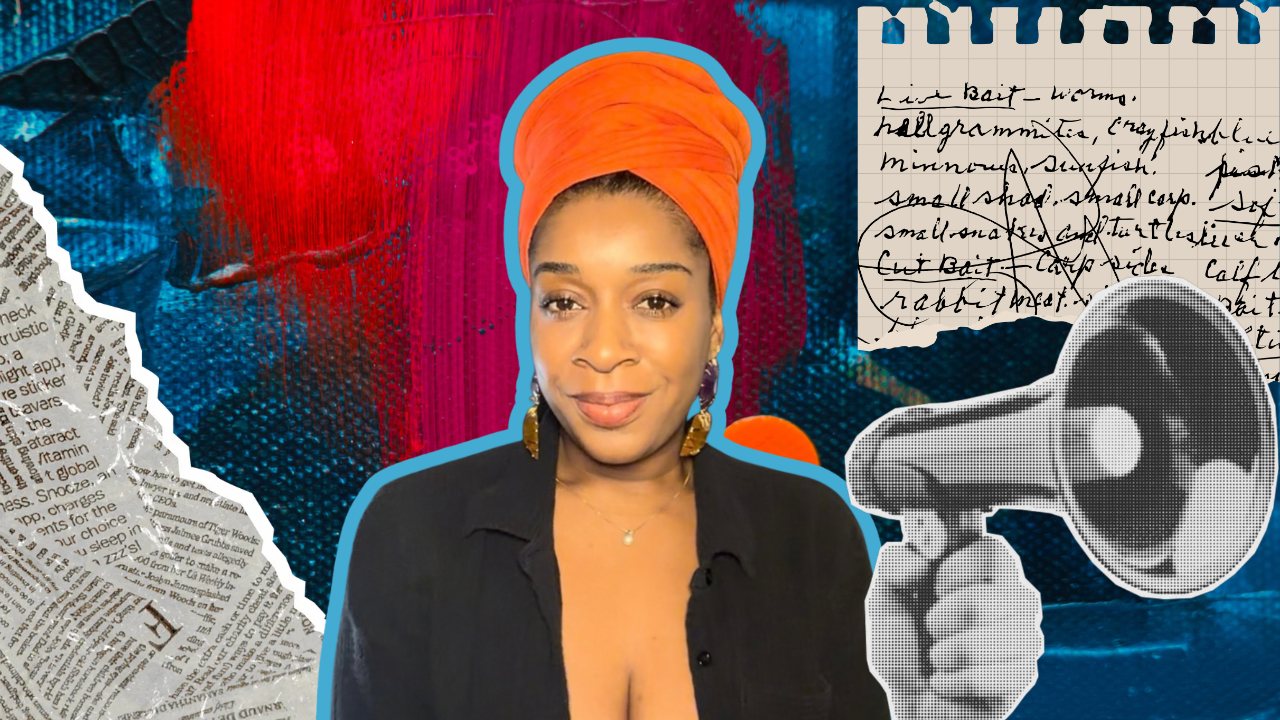
March may be coming to a close, but we’re not done celebrating the Black women shaping our communities — especially those building something both beautiful and lasting. This past Friday, inside the cozy, art-lined walls of English-Brown Winery, the founders of I Love Us sat down with entrepreneur and winemaker Shavon Brown to chat over glasses of her signature wines and a spread of charcuterie.
“I just do what I like,” she said with a shrug and a smile, bottle in one hand, confidence in the other. “And then I figure out how to make money from it.”
//www.instagram.com/embed.js
That ethos has taken Brown from the barre to the bar. A classically trained ballerina from age 5 to 21, Brown once auditioned to be a Knicks City Dancer — but life pivoted when she found out she was pregnant. Today, she juggles motherhood, multiple family businesses, and a boutique winery that bears the names of both her parents: English (her mother’s maiden name) and Brown (her father’s surname).
However, don’t let the small batches and cozy vibes fool you: English-Brown Winery is a masterclass in what happens when hustle meets heritage.
A Family Affair
One of the most impactful ways Shavon builds community is through her monthly Women’s LinkUp, held on the first Saturday of every month at The Byte Bodega & Co-Work. The intimate gathering brings together women from all walks of life to network, collaborate, and share space with intention.
“It’s about connecting with other women who get it,” she explained. “Whether you’re figuring out how to send an invoice or just need to vent about customer service, having a tribe who understands makes all the difference.”
That desire to create community for others stems from a truth she’s lived: not everyone has a built-in support system. “My support system is mostly my family, but I know that’s not the case for everyone. That’s why I try to be that for other women.”
English-Brown and the aformentioned The Byte Bodega & Co-Work are part of a larger family of ventures. In addition to other businesses owned by her parents, Gigi’s Music Cafe is a local favorite for brunch and live music. While English-Brown Winery is the business Shavon runs largely on her own, family is never far away. Brown says the goal is to create enough opportunities within the family’s ventures that future generations never have to look elsewhere for work—even if they choose to.

“One person doesn’t do one thing,” Brown said. “Everyone does everything. Depending on the day, I might be doing collard greens [at Gigi’s Music Cafe]. I might be bartending. It just depends on what needs to be done.”
Her mother, Gigi, remains a north star in her decision-making. “She always told me, ‘Say yes. Figure it out later.’ And honestly, that’s how I ended up making wine.”
The origin story of English-Brown Winery sounds like something scripted for a sitcom: Gigi’s Music Cafe began serving well-loved in-house wines. On her birthday, over dinner before a Nas and Mary J. Blige concert, Shavon told her mother she couldn’t find a new wine supplier after their previous partner retired.
“She said, ‘Don’t worry about it, I bought the company.’ I said, ‘Well who is going to make the wine, G?’ She said, ‘You are.’ I [said], ‘Oh… happy birthday to me, I guess.’”

The retired winemakers who previously owned the company flew back and forth, personally training Shavon on the chemistry, the bottling, the process. She learned it all. Then, like a true entrepreneur, she expanded. “If I’m going to make it for the restaurant, I might as well make it for the public.”
Grit, Grapes, and Government Red Tape
“Making the wine isn’t the hard part. It’s the paperwork,” she said, exhaling just a bit. “The TTB, the ATF, the formulas, the labels—you need a yes from this person, that person, before you can even put it on a shelf.”
Brown breaks down the process like someone who’s learned it the hard way: by doing.
“Let’s say I’m making a traditional Chardonnay. They might not ask for a sample. But if I’m doing something new like a watermelon wine? They want the formula. They want to test the alcohol. They want to read the label. If I say it’s wine, but it turns out it’s 22%, that makes it liquor.”
Her license only covers products up to 21%. Every single product — from alcohol content to label copy — must be verified.
“All of that takes longer than making the actual wine,” she shared, noting that the red tape is often what discourages many aspiring Black winemakers.
A Taste for Community
During our visit, Brown walked us through the winemaking process, down to the five-gallon buckets and hand drills. “People think it’s some huge machine. It’s not,” she said. “It’s small-batch. Five gallons. That’s about 26 to 30 bottles.”
We tasted a few of those small-batch creations ourselves. Her Riesling features crisp apple notes, a subtle touch of spice, and a hint of minerality on the nose—an easy-drinking wine that still holds character. It was the Endless Summer that really stood out—a sweet wine named for her daughter, Summer, and a nod to the Sunshine State she now calls home. With mango and dragonfruit notes, it was vibrant, tropical, and joyfully layered—a reflection of the woman who made it.
Though English-Brown wine is available for retail, Brown is intentional about keeping it boutique. “People ask me all the time, ‘Don’t you want to be in Publix? Total Wine?’ Not right now. I make all the wine myself. I want to be able to fulfill what I commit to.”
She’s found success instead by partnering with local chefs for events, offering private labels for real estate closings and weddings, and building a loyal audience — mostly Black women and out-of-town visitors who find her through hotels or Visit Lauderdale.
“English-Brown has its own audience and it’s mostly Black women. That’s my audience here.”
Doing It Her Way
Whether she’s behind the bar or blogging for Bossy Mag, Brown is always telling stories—through wine, words, or community.
“The magazine started as a mommy blog. My youngest son has autism. I wanted to create something for young stay-at-home moms.”
That journey evolved into a full-fledged media career. “At first, I didn’t have a clear plan. I was just writing little blogs,” she recalled. “But when I decided to move from the blog to the magazine, I wanted to be Oprah. I wanted to do this thing.”
She launched Bossy Magazine in 2014, when digital magazines were still emerging. “People weren’t doing that yet. And it stood out. When I pitched, they’d say, ‘Oh, this isn’t a blog. This is a magazine. Invite her.’ That’s when I started to understand branding.”
She loved the process of building the publication and platform. “I love talking to women. I love hearing about what they’re passionate about. It’s like… you fall a little in love with them while they talk about what they love.”
That love fueled live shows, panel events, even a radio program. However, with success came strain.
“We were monthly, then bimonthly. Then I had a weekly show. And I was showing up to events. And throwing my own events. And at some point, I just felt drained. It wasn’t about the passion anymore. It was about what I had to do, what money I had to make.”
Her advice to women who are business owners? “Delegate. Find some people who believe in your dream and your brand. We birth businesses like babies—we don’t want to let go. We have to learn to say no or delegate without guilt.”
Shavon Brown is a woman who trusts her instincts, honors her family, and makes magic out of moments. “It’s okay to follow all your talents,” she said. “It’s okay to lean on people. As we learned over glasses of Riesling and Endless Summer, it’s more than okay to bet on yourself.



Leave a Reply