

Black artists are no longer playing by the old rules. They’re flipping the script on an industry that long treated them as dispensable—valued for their talent but denied ownership of their work and the wealth it generates. What we see today is a deliberate, calculated reclamation of power: artists are becoming owners, entrepreneurs, and cultural gatekeepers.
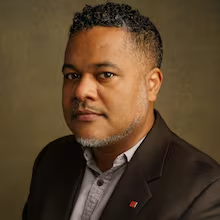
To unpack this transformation, I Love Us spoke with Mike Jordan, senior editor at the Atlanta Journal-Constitution’s Black culture brand, UATL. Mike’s decades of experience covering Black musicians and cultural movements gives him a razor-sharp perspective on how artists are negotiating, owning, and influencing on their own terms. He told us straight:
“Recording artists today are far savvier about the concept of intellectual property. More music creators—songwriters and producers especially—seem more familiar with what they’re giving up when they make deals in today’s music business model. They’re also reminded of what their recent musical heroes endured with the business model of recent decades. The internet and social media—and the idea of all things being content, and all content being someone’s IP—have changed the game.”
Understanding the stakes is important for today’s artists. The industry’s history is littered with stories of Black artists signing contracts that left them with little control and even less money.
Toni Braxton is often cited as a textbook example of how an artist can generate millions in sales but receive a fraction of the earnings. Despite selling over 20 million albums, Toni reportedly earned just about $1,972 from her initial deal—an arrangement so toxic it led to bankruptcies, lawsuits, and the loss of rights to 27 of her songs.
TLC’s story is no less harrowing. Their album CrazySexyCool went diamond and generated roughly $175 million, but by 1995, the trio was in $3.5 million debt and reportedly made only 56 cents per album sold. This financial trap forced them to file for Chapter 11 bankruptcy.
These histories serve as grim reminders for today’s artists who are more determined to avoid these pitfalls.
Ownership as Power, Not Just Profit
Mike Jordan’s observation that today’s artists are “far savvier” about intellectual property is not just about knowing terms or having lawyers on speed dial. It’s a cultural shift. Artists are demanding to own their publishing and masters from day one, sometimes even walking away if the deal doesn’t honor that.
“Without seeing what’s actually in today’s recording contracts, I at least hear artists showing more awareness of how publishing and ownership of masters works,” Jordan explains. “That understanding seems to be opening the door to creative ways of retaining them in the beginning more than regaining them later.”
This point hits hard because historically, regaining ownership after the fact has been near impossible or extremely costly. Think of Prince’s well-documented fight for control over his masters. For Black artists, many of whom have faced systemic barriers to legal and financial literacy, this is groundbreaking.
This savvy is part of a broader cultural awareness. The rise of social media and digital platforms means artists now understand that their music is content—content that can be monetized in multiple ways beyond album sales. TikTok has not only propelled new music, but also given classics—like Janet Jackson’s 2001 hit Someone to Call My Lover—a second run. The old gatekeepers are no longer the sole arbiters of who profits from Black creativity.
@auntienae95 If yall need more recommendations let me know 😂
♬ Someone To Call My Lover – Janet Jackson
The Indie Revolution and New Business Models
Independent artists like Chance the Rapper and Brent Faiyaz embody this new mindset. They bypass traditional label deals and use tools like Bandcamp, DistroKid, and social media to maintain full ownership of their work. This direct-to-fan approach allows them to control not just the creative process but also the financial outcomes.
This shift is dismantling the myth that artists must sign away rights to succeed. While indie artists often face challenges in scale and marketing, their ownership stakes grant them long-term wealth-building potential.
For major artists who still partner with labels, Jordan points to Beyoncé’s Parkwood Entertainment as an example of how artists can build creative and economic ecosystems that support both ownership and long-term influence. Megan Thee Stallion’s public legal battle with her former label 1501 Certified Entertainment is another example, forcing industry conversations about artist rights into the mainstream.
Licensing: The New Frontier
One of the most overlooked avenues in artist ownership is licensing—the use of music in TV, commercials, films, video games, and more. Licensing creates visibility and recurring income, especially when an artist owns their masters and publishing rights.
Mike Jordan sees licensing as the next battleground for Black artists, especially in hip-hop and R&B/soul, genres that dominate charts year after year.
“What I think would be interesting is more conversation around the value of licensing music and why that might matter in the future, especially with hip-hop and R&B/ soul artists continuing to top charts,” he notes.
Sync deals can be game-changers, giving artists new revenue streams independent of traditional sales and streaming. However, the power to negotiate these deals depends on who owns the underlying rights. If an artist’s masters are controlled by a label, licensing income may largely bypass them.
The Catalog Sales Debate
While ownership is growing, many artists are also selling their catalogs to investment firms and labels for huge sums. This trend is reshaping what it means to hold ownership today.
Jordan weighs in:
“With so many artists selling their catalogs, it’s unclear what will become the new norm with ownership and what it’s worth, particularly in the streaming era.”
This raises complex questions. Selling a catalog offers immediate financial reward—sometimes eight figures or more—but it means forfeiting control and future earnings. Some artists use catalog sales to fund new ventures or secure their financial futures, while others worry about the cultural cost.
It’s a delicate balance between short-term wealth and long-term legacy—something that every artist, manager, and lawyer will have to consider carefully.
Atlanta and the Infrastructure Advantage
While digital platforms have broadened access, geography still plays a role in shaping how artists build power and influence. For decades, cities like New York, Los Angeles, and Atlanta were musical epicenters. Jordan argues that some cities maintain their edge by fostering industry infrastructure.
For Jordan, Atlanta stands out. Known as a Black cultural powerhouse, it’s home to labels like Quality Control, LVRN, and several influential producers and studios. This infrastructure creates a self-sustaining ecosystem where Black artists and entrepreneurs collaborate and build businesses around ownership.
“Atlanta’s still leading the way but that’s because it established itself as a place where music business happens, and it’s such an epicenter of Black culture and talent,” Jordan says.
Atlanta’s model shows how cities can support artist ownership beyond just providing a home for creative talent. It’s also about creating opportunities for Black professionals across legal, business, tech, and creative sectors to build and maintain ownership and influence collectively.
Reclaiming Narrative Control
Ownership of music also means control over cultural narratives. When Black artists own their masters and publishing, they own their stories. They decide how their work is used, how it’s presented, and how their legacies are preserved.
This shift is a form of liberation. It pushes back against a history where Black creativity was mined and monetized by others, often with little benefit to the creators themselves.
The Future Is Black Ownership
With a sharper grasp of contracts, intellectual property, and licensing, today’s artists are navigating the industry on their own terms. The game has changed and Black artists are setting the pace. If Toni Braxton, TLC, and Prince taught us anything, it’s this: ownership is essential. Now, a new generation is writing the next chapter, and we’re watching it unfold in real time.
Cover photo: How Black Artists Are Flipping the Industry Script on Ownership and Influence / Credit: Darren Xu


Leave a Reply