
In 1995, Black culture was the engine. The year gave us new voices in hip-hop, soundtracks that doubled as survival guides, television networks finally giving Black families their shine, and film moments that still live rent-free in our heads. Thirty years later, these moments remind us just how much ’95 shaped the landscape we’re standing on now.
Here are 30 Black arts and entertainment milestones that turn 30 this year—and why they still matter.
A Year of Iconic Music Moments
At the 1995 Source Awards, OutKast went from underdogs to prophets. Booed by a New York crowd, André 3000 declared, “The South got something to say.” That single line it marked the birth of Atlanta as hip-hop’s next capital.
On the pop side, Michael and Janet Jackson shut down the summer with “Scream,” a futuristic, black-and-white spectacle that became the most expensive music video ever made. Michael kept making history when “You Are Not Alone” became the first song to debut at No. 1 on the Billboard Hot 100.
Mariah Carey’s “Fantasy” hit the same milestone, making her the first solo female to do it—and when she tapped Ol’ Dirty Bastard for the remix, she rewrote the rules of pop-rap crossover.
Meanwhile, TLC ruled the charts with “Waterfalls,” blending a cautionary tale about HIV and violence with an iconic video.
Live Performance That Shifted the Stage
The Off-Broadway debut of Bring in ’da Noise, Bring in ’da Funk introduced Savion Glover’s revolutionary tap to the world on April 25, 1995. Fusing rhythm with history, the show reframed tap dance as a vessel for Black storytelling, stretching from plantation fields to hip-hop streets. The production’s mix of percussion, politics, and performance became a cultural landmark and laid the foundation for its Tony-winning Broadway transfer the following year.
Television & Networks
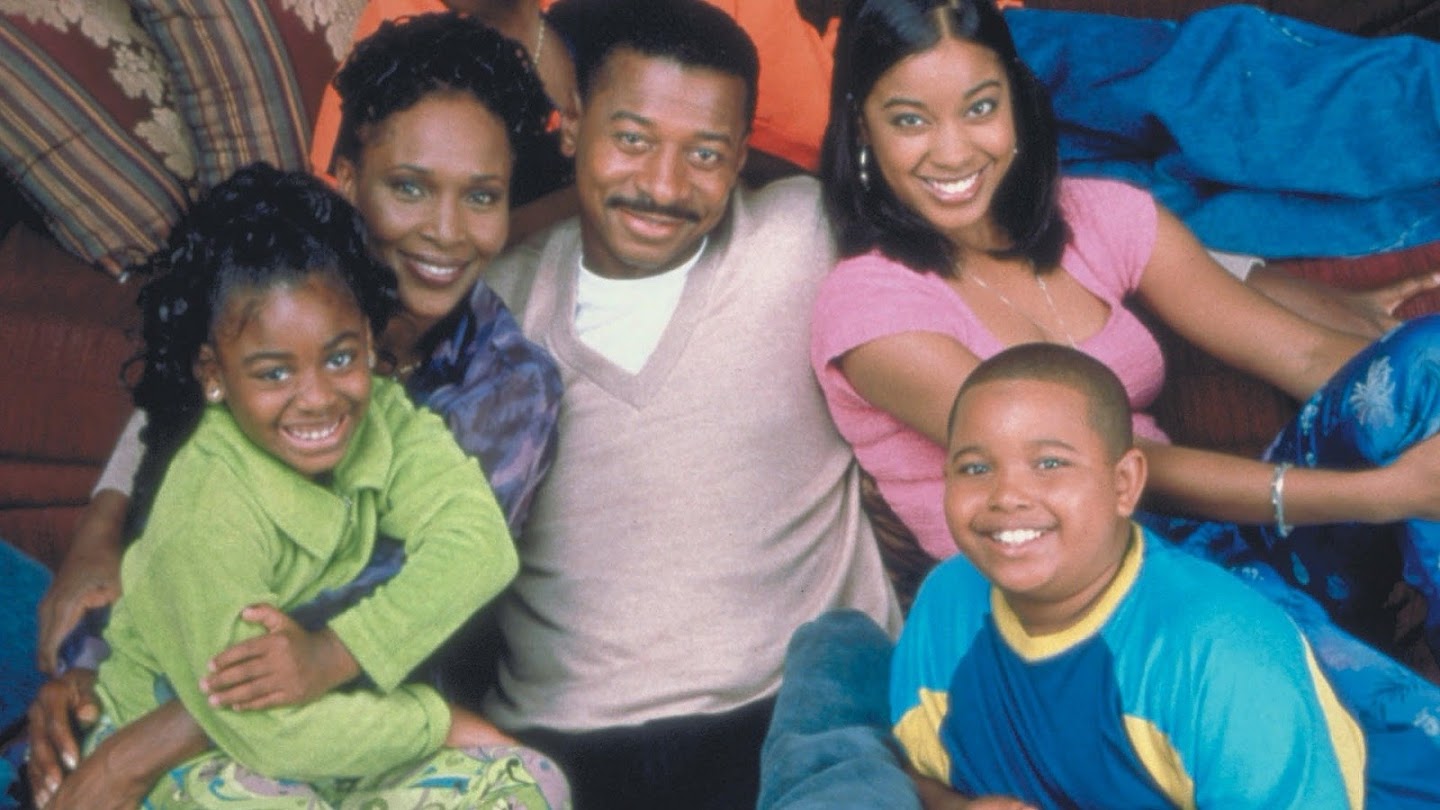
That same year, UPN launched, opening a new chapter in Black television. The WB rolled out comedies like The Wayans Bros., with Harlem comedy rooted in family hustle, and Robert Townsend’s The Parent ’Hood gave the network its Black family anchor. LL Cool J even got his own sitcom, In the House, alongside Debbie Allen.
For the first time, Black-led sitcoms were the foundation of new networks.
Albums That Changed the Sound
If 1994 was Biggie’s year, 1995 spread the wealth. The Roots dropped Do You Want More?!!!??!, blending live instrumentation with lyricism in a way mainstream rap had never seen. Wu-Tang’s wild card, Ol’ Dirty Bastard, delivered his solo debut Return to the 36 Chambers, while Mobb Deep released The Infamous, a cold, cinematic portrait of Queensbridge life.
In R&B, Montell Jordan gave us a cookout anthem with “This Is How We Do It,” while Oakland duo Luniz had everybody chipping in on “I Got 5 on It.” Method Man and Mary J. Blige redefined the rap-ballad with “I’ll Be There for You/You’re All I Need to Get By,” and a new wave of stars broke through—D’Angelo’s Brown Sugar sparked the neo-soul era, Goodie Mob’s Soul Food solidified the Dungeon Family’s rise, and both Faith Evans (Faith) and Monica (Miss Thang) announced the future of R&B.
The Notorious B.I.G.’s “One More Chance (Remix)” became a summer anthem, boosted by a star-studded Hype Williams video, while Bad Boy’s girl group Total made their debut with “Can’t You See.”
Films We’re Still Quoting
On the big screen, Black directors and stars took center stage. Will Smith and Martin Lawrence teamed up in Bad Boys, turning a buddy-cop comedy into a blockbuster franchise. John Singleton’s Higher Learning tackled racism, sexual assault, and identity on a college campus, with breakout roles for Ice Cube and Tyra Banks.
That fall, Dead Presidents delivered one of the most haunting depictions of Black Vietnam vets, its heist imagery still iconic. Spike Lee released Clockers, a street-level crime drama with the tension of Shakespeare. Devil in a Blue Dress gave us Denzel Washington as Easy Rawlins and Don Cheadle in a star-making turn. And right at year’s end, Waiting to Exhale hit theaters with Whitney Houston, Angela Bassett, Loretta Devine, and Lela Rochon, backed by a soundtrack that was essentially a who’s who of Black women in R&B.
The Legacy of ’95
The proof is in the playback: 1995 is still teaching, still moving, and still inspiring. These 30 moments remind us that when Black culture leads, the world follows. Thirty years on, we’re still ahead.


Leave a Reply